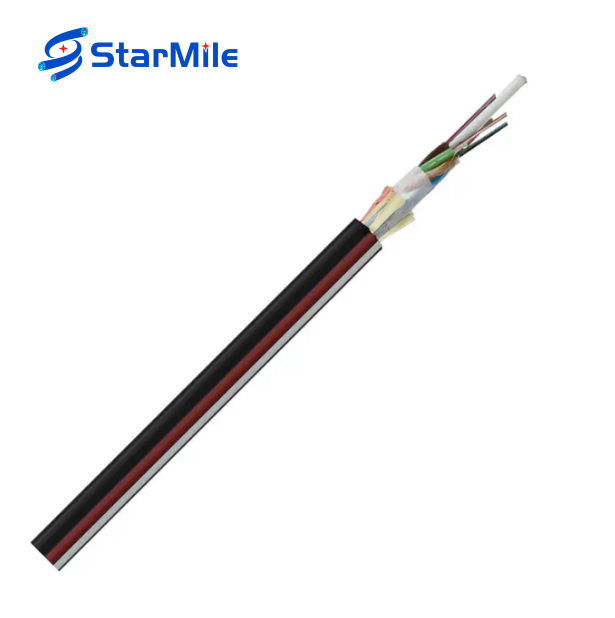
■ ADSS Cable Guide: 12/24/48 Core Fiber Optic Types, Specifications
ADSS (All-Dielectric Self-Supporting) fiber optic cable is a type of aerial cable specially designed for installation along overhead power lines or telecommunication poles, without requiring any metallic support structure or grounding. It is:
- All-dielectric: Non-metallic features, providing a shield against the interference of electromagnetic waves.
- Self-supporting: Capable of upholding its own weight over spaces as large as 1000 m.
- Highly reliable: Engineered for a service life of many decades, characterized by outdoor use in environments of intense weather.
ADSS Cable Full Form and Meaning
Full Form: The ADSS is an abbreviation for All-Dielectric Self-Supporting.
Definition: Such a fiber optic cable is made for aerial installation and it is not supported with a messenger wire. It comprises non-metallic materials and has the ability to support its own weight in between poles or towers.
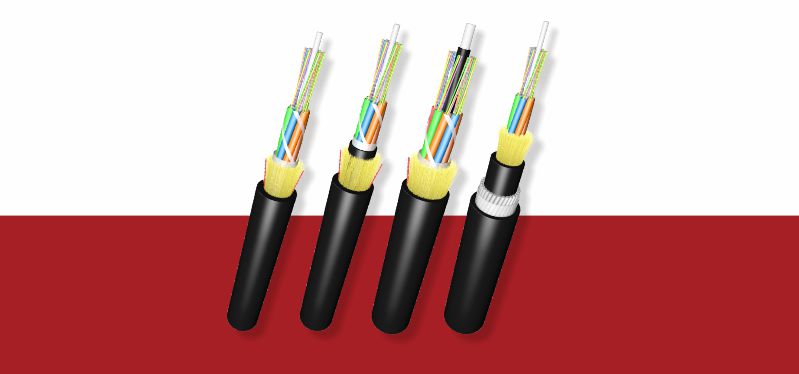
■ ADSS Cable Types Overview
1. By Core Count: 12/24/48 Core
| Core Count | Ideal Use Case | Remarks |
| 12 Core | Rural fiber rollout, security camera systems, low-traffic FTTH links | Low capacity, cost-effective |
| 24 Core | Campus networks, mid-sized ISP backbones, industrial parks | Most popular model |
| 48 Core | Metropolitan networks, electric utility grids, 5G backhaul | High-density transmission |
Each core carries a single optical fiber, typically G.652D or G.657A1, supporting long-distance single-mode communication.
2. By Brand
| Brand | Highlights |
| AFL | U.S.-based, known for long-span and premium mechanical design |
| Prysmian | European leader, UV-resistant and reliable cable lifespan |
| Corning | High-grade optical fiber, stable performance in harsh conditions |
| Zion Communication | Trusted OEM manufacturer in China, flexible customization for global markets |
3. By Structure
- All-dielectric: Material missing that’s metal, thus ok for areas near high-voltage.
- Self-supporting: Concept to cover the distance of 100m-1000m in between the electrical towers.
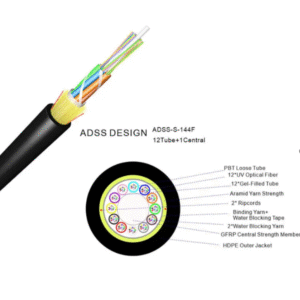
- Loose tube design: Fibers are safeguarded using gel or dry filler tubes.
- Single or double sheath: Protective covering against UV, moisture, wind, and corrosion.
- FRP Central Rod: This provides the longitudinal strength and is also anti-buckling.
■ Technical Specifications: 12 / 24 / 48 Core ADSS Cable
| Parameter | 12 Core | 24 Core | 48 Core |
| Fiber Type | SM G.652D / G.657A1 | SM G.652D / G.657A1 | SM G.652D / G.657A1 |
| Core Count | 12 | 24 | 48 |
| Max Span | 100–500 m | 100–800 m | 300–1000 m |
| Sheath Type | PE / AT | PE / AT | PE / AT |
| Strength Member | Aramid Yarn | Aramid Yarn | Aramid Yarn |
| Central Rod | FRP | FRP | FRP |
| Tensile Strength (Short) | ≥3000 N | ≥5000 N | ≥8000 N |
| Crush Resistance | ≥1000 N/100mm | ≥1000 N/100mm | ≥1000 N/100mm |
| Operating Temp | -40°C ~ +70°C | -40°C ~ +70°C | -40°C ~ +70°C |
| UV Resistance | Yes | Yes | Yes |
| Compliance | IEC 60794, RoHS, ISO9001 | IEC 60794, RoHS, ISO9001 | IEC 60794, RoHS, ISO9001 |
■ ADSS Cable Installation & Accessories
ADSS Cable Installation Overview
ADSS cable installation makes use of the pole-to-pole or tower-to-tower spans, frequently requiring no other supporting wires. Their design allows:
- Direct aerial installation
- No metallic parts, and hence no possibility for an induced voltage or a grounding required.
- Easy deployment even in high-voltage environments (up to 220kV)
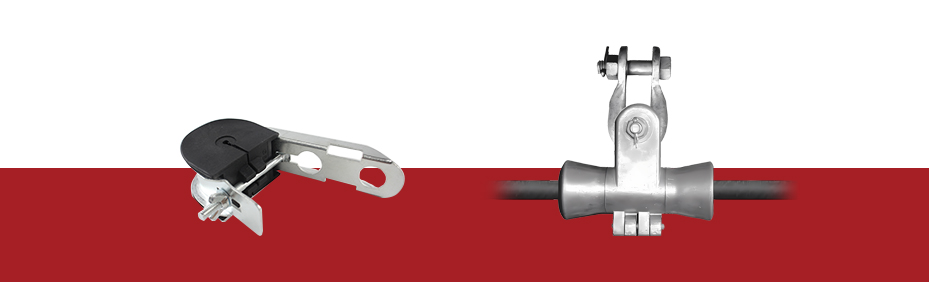
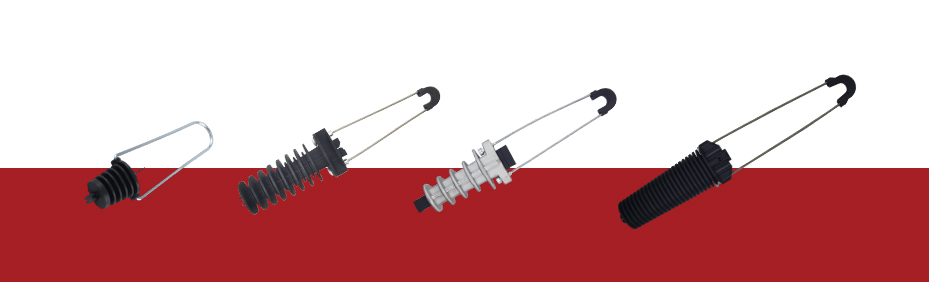
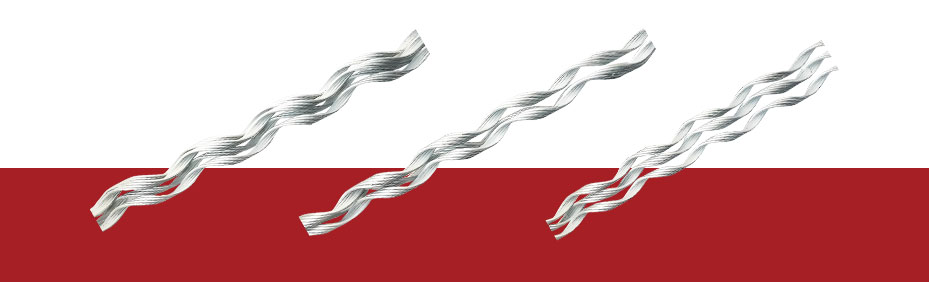
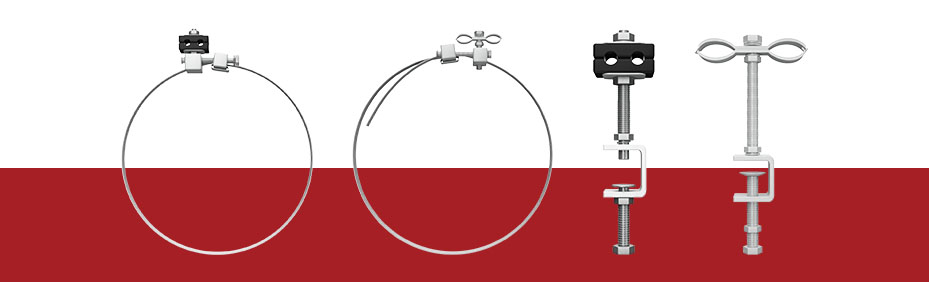
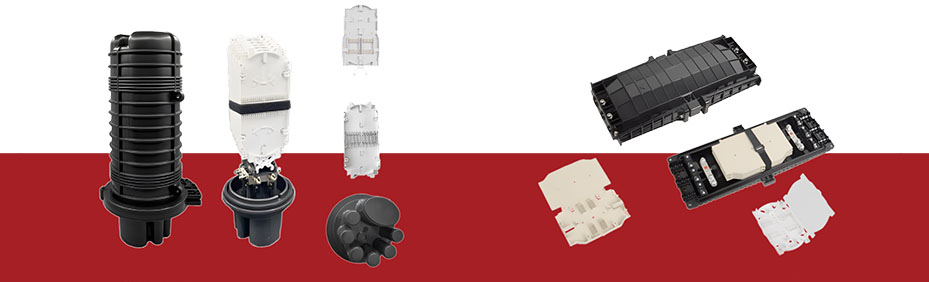
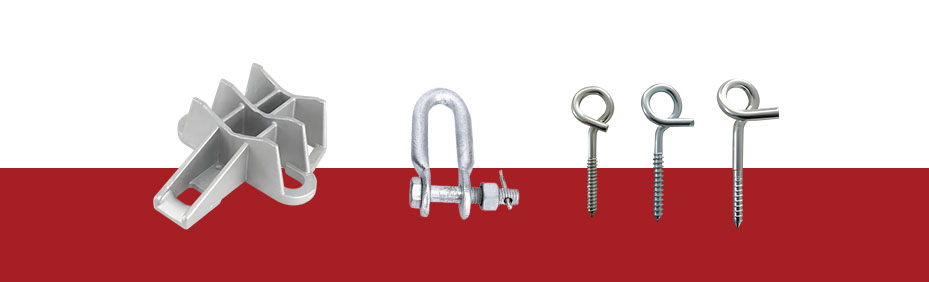
Common ADSS Accessories
| Accessory | Purpose |
| Suspension Clamp | Holds cable on straight poles while allowing movement |
| Tension Clamp | Anchors cable at tension or termination points |
| Armor Rod | Protects cable from compression and bending at clamp points |
| Vibration Damper | Reduces Aeolian vibration caused by wind |
| Down Lead Clamp | Guides cable down the pole neatly |
ADSS Cable Installation Accessories for Aerial Fiber Deployment


■ ADSS Cable Application Scenarios
- 5G and FTTH backbone lines
- Power grid communication over 35–220kV lines
- Oil, gas, mining, or railway transmission
- Mountain or forest areas where trenching is challenging
- Campus and Enterprise Interconnection
■ Frequently Asked Questions (FAQ)
Q1: How do I choose between 12, 24, and 48 cores?
A: Choosing depends on the scale of your network. For small links, the 12 cores are in sufficient size and for large backbone lines, the 12 and 24/48 cores are suited to both medium and large links.
Q2: What is the difference between PE and AT sheath?
A: PE (polyethylene) is for low-voltage installations (110kV) because it is made up of thermosetting material available for electrical tracking and surge.
Q3: What is the maximum span for ADSS cable?
A: Standard spans are in the range of 100m to 600m (with each component cables being several strands of fibers); however, custom designs can be 800–1200m in long spans to have better tensile featured and a larger outer diameter.
Q4: Can ADSS cable be buried?
A: Not advisable. Because ADSS cable is made for the aerial installation only. Choose duct cables or armored cables for underground installation.
Q5: What is the lifespan of ADSS cable?
A: 25–30 years, with the right installation and environmental suitability.
■ Ordering & OEM Service With Starmile:
Starmile providing:
- OEM logo printing & drum marking
- Exclusive sheath color, fiber type, and resignation span installation
- Fast delivery from stock lot or by production
- An all-sufficient accessory kit for secure installation.
■ Get a Quote Now
Searching for an authentic partner who will supply you with ADSS fiber optic cables?
Contact us today for:
- Technical data sheet.
- Updation on the pricing list (FOB, CIF, DDP).
- Suggestion on the installation design.