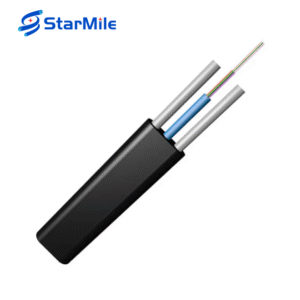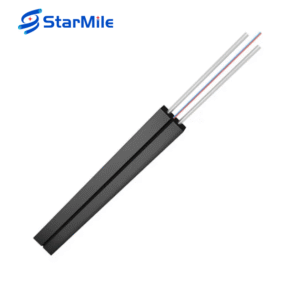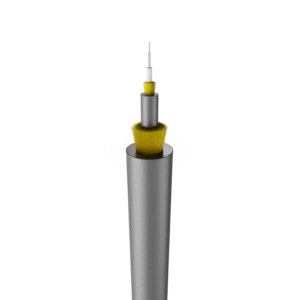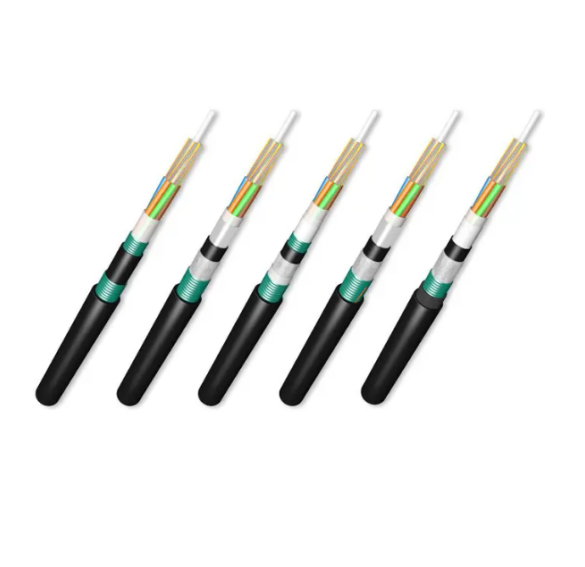
■ Direct Buried Optic Fiber Cable | Armored Fiber Optic Cables for buried application.
These cables have been engineered for direct underground installation and are guaranteed to withstand any conditions without the need for extra conduit. These cables assure supreme mechanical strength, high resistance to moisture, and great ecological durability. They are the best solution for areas where duct insertion is impossible, including rural network areas, long-distance trunk lines, and open-field conditions where no covered area exists.
■ Direct Buried Optical Cable Key Design Features
Direct-buried fiber optic cables typically consist of multiple layers of protection to withstand underground conditions, including:
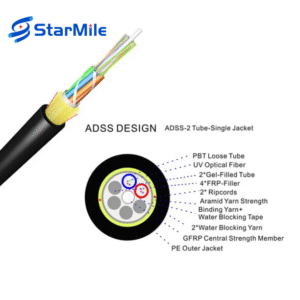
- Loose Tube Design: Optical fibers here are being laid down inside of loose tubes filled with gel that is designed for water resistance.
- Central Strength Member (steel or FRP): Provides tensile strength and structural integrity for the fiber optic cable.
- Double Armoring: In all models, steel tape armor and a polyvinyl chloride (PVC) sheath are common elements, and such armor is often in double layers for enhanced rodent and crushing resistance.
- Moisture Barrier: A moisture-migration barrier tape or jelly blocks moisture from pulling along.
- Outer Sheath: Heavy-weight, highly durable UV-stabilized PE or optional nylon outer sheath. The Flame-Retardant Shelter (FRS) can be manufactured in various colors, allowing customers to select their own designs.
■ Direct Buried Optical Cable Application Scenarios
Direct buried fiber optic cables are often deployed in:
- Long-distance trunk line segments in countryside areas and developmentally void parking lots.
- Suburban backbone equipping schemes with no service avenue for the underground.
- In field installations, the feeder cables for FTTH are usually in greenfield situations.
- Mechanical protection is an essential requirement for underground installations, making them more suitable.
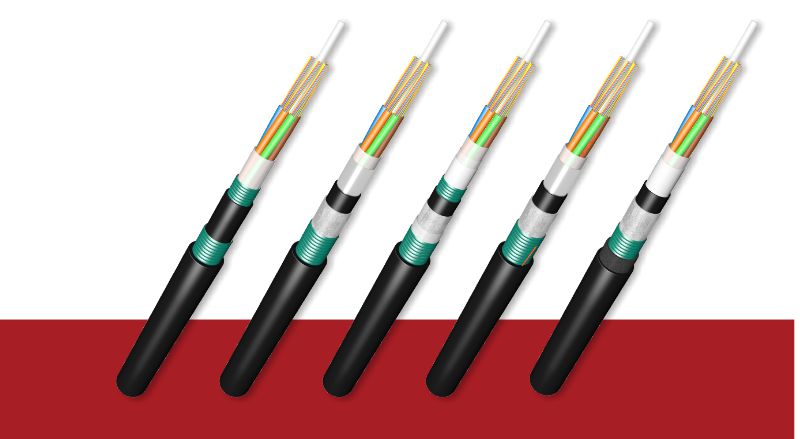
■ Common Models of Direct Buried Cables
✅ All models are designed for direct burial and provide high crush resistance and protection against rodents, soil pressure, and water ingress.
Get a Quote
■ How to Choose the Right Direct Buried Optical Cable
Selecting the correct direct-buried optical fiber cable is crucial for ensuring long-term reliability in underground environments. Below is a structured selection guide based on installation conditions, mechanical protection, fiber requirements, and environmental considerations.
1. Choose Based on Installation Environment
2. Choose Based on Structural Protection Needs
3. Choose Based on Fiber Type & Network Scenario
■ Fiber Specification Snapshot
Direct buried cables can be manufactured with G.652.D, G.657.A1, or G.657.A2 fibers:
■ Fiber & Tube Color Coding
Fiber color coding follows TIA/EIA-598 or YD/T standards, using the standard 12-color sequence (Blue, Orange, Green, Brown, Grey, White, Red, Black, Yellow, Violet, Pink, Aqua). Tubes are coded similarly. Additional fiber counts repeat the color sequence with color ring marks.
Fiber Color Standard Sequence
Note:
1. If there are less than 12 fibers in a loose tube, the color sequence is followed continuously, starting from No.1,
2. In the standard color sequence, No.6 white color can be replaced by natural color, called the W color sequence.
3. Color arrangement can be customized.
Tube Color Standard Sequence
■ Cable Marking and Packing
- Standard Drum Length: 2000–4000m per wooden drum.
- Drum Markings: Manufacturer, fiber type, production year/month, gross/net weight, and project number (optional).
- Packaging: Each reel is protected with plastic buffer film and secured with wooden battens.
■ Need a Reliable Supplier of Outdoor Optical Cables?
STARMILE offers:
✔ Large selection of outdoor fiber cable categories.
✔ A/B (OEM/ODM) branding into the problem you need.
✔ Compatibility with ITU-T, IEC, and TIA/EIA standards.
✔ Cost-effective and rapid delivery.
Contact us now to get datasheets, samples, and a project-based quote.