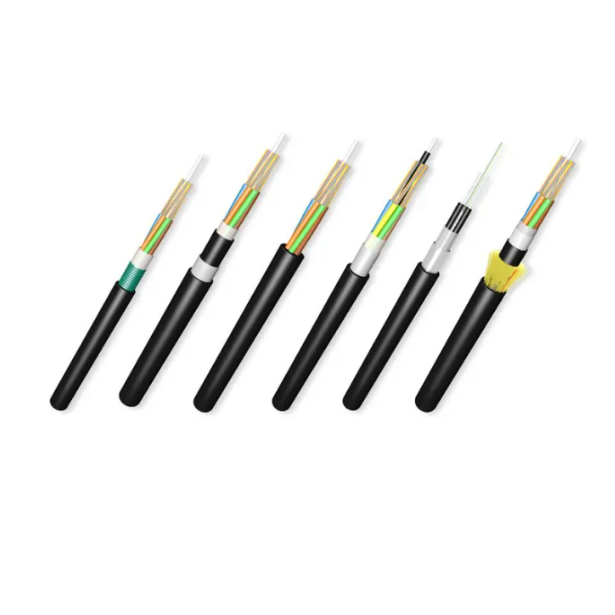
■ Duct Optical Fiber Cables – GYTA, GYTS, GYFTY Series for Underground Use
Outdoor Duct Optical Cables are strands of specially designed fiber optic cable that are ideally suitable for deployment in underground conduits or ducts. This type of cable guarantees total security for optical fibers while providing long-distance, high-speed data transmission. Duct cables are widely used in backbone networks, metropolitan area networks (MANs), and access networks, particularly in situations where underground ducting provides a secure and stable routing.
■ Duct Optical Fiber Cable Structure & Design Features
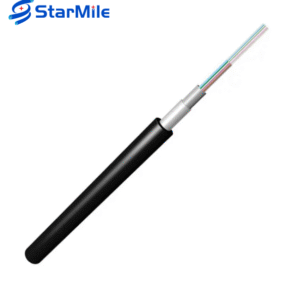
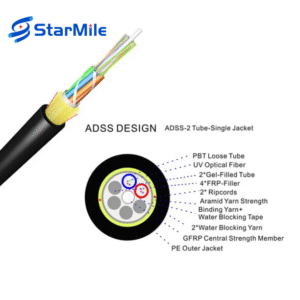
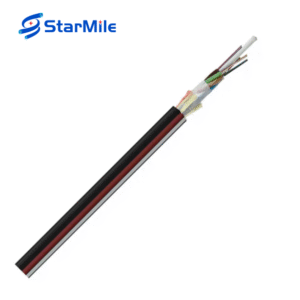
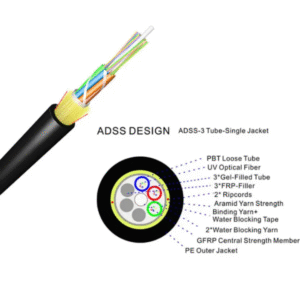
The rugged optical fiber cables designed for duct installation are composed of several components, including strength members, water-blocking features, armoring (metal or non-metallic), and outer sheath (PE or self-contained).
These cables’ structure guarantees that they will withstand wet, harsh, and extreme weather cuts as well as mechanical stress.
Common design features include:
- The design is a loose tube filled with a water-blocking compound
- Occasional armoring with steel or aluminum tape
- The Central Strength Member is a CSM made of steel or FRP.
- Corrugated steel tape or steel wires for enhanced mechanical protection.
- A black polyethylene (PE) outer sheath for UV (ultraviolet rays) and chemical resistance.
■ Typical Cable Types in This Category
The selection of models used in duct laying is well documented and highlighted in the PDF:
✅ These cables are non-self-supporting, intended for duct laying, and in some cases, can also be installed in aerial lashing scenarios.
Get a Quote
Customize Your Outdoor Optical Fiber Cable
■ How to Choose Different Types of Outdoor Duct Optical Cable
1. Select by Installation Environment
2. Select by Structural Features
3. Select by Fiber Type (ITU-T Standard)
4. Comparison Table of Typical Models
Buyer Tips
- Ducts with pull-rope inside: Use non-self-supporting models like GYTA or GYTS
- Electric interference concerns: Choose non-metallic models like GYFTY or GYFTA
- Rodent-prone or high-risk areas: Choose steel tape armored cables like GYTS
- High-volume splicing required: Consider ribbon fiber versions (e.g., GYDTA) for faster fusion
■ Application Scenarios
- The outdoor duct fiber cables are perfect for:
- Long-run telecommunication trunk lines
- Metropolitan backbone connections
- Access networks linking centers and exchanges
- Underground cable duct or subway
- Fiber optic cables (FTTH) installations
■ Fiber & Tube Color Coding
Fiber color coding follows TIA/EIA-598 or YD/T standards, using the standard 12-color sequence (Blue, Orange, Green, Brown, Grey, White, Red, Black, Yellow, Violet, Pink, Aqua). Tubes are coded similarly. Additional fiber counts repeat the color sequence with color ring marks.
Fiber Color Standard Sequence
Note:
1. If there are less than 12 fibers in a loose tube, the color sequence is followed continuously, starting from No.1,
2. In the standard color sequence, No.6 white color can be replaced by natural color, called the W color sequence.
3. Color arrangement can be customized.
Tube Color Standard Sequence
■ Cable Marking and Packing
Each cable length is supplied on robust wooden drums, wrapped with a plastic sheet and sealed with battens. Typical marking includes:
- Manufacturer Logo & Fiber Type (e.g., G.652D)
- Fiber Count & Cable Type (e.g., GYTA 96C)
- Meter Marking every 1m
- Drum marking includes origin, project ID, and contract details
Standard drum lengths range from 2000–4000 meters, with at least 96% usable cable length per drum.
■ Need a Reliable Supplier of Outdoor Optical Cables?
Zion Communication offers:
✔ Large selection of outdoor fiber cable categories.
✔ A/B (OEM/ODM) branding into the problem you need.
✔ Compatibility with ITU-T, IEC, and TIA/EIA standards.
✔ Cost-effective and rapid delivery.
Contact us now to get datasheets, samples, and a project-based quote.